

The 2nd International Conference on Debate & Dialogue
The ICDD serves as an open platform for the discussion of specialized academic issues that enrich knowledge in the fields of debating, dialogue, argumentation, and related disciplines such as philosophy, education, linguistics, and Islamic sciences. By uniting academics, practitioners, and enthusiasts, the conference delves into various dimensions of debate and dialogue, emphasizing both theoretical and practical aspects. Through the fostering of rigorous research, QatarDebate aims to elevate intellectual discourse within the global debate community, promoting a deeper understanding and appreciation of these critical areas.
Debate: Between the Past and the Present
Debate and critical thinking have a rich and long tradition within Arab-Islamic societies throughout the centuries. Particularly, the landscape of Arabic debating has significantly expanded to new forms and fields over the past decade and a half, thanks to the rise of digital media, evolving political climates, and the emergence of new NGOs and civil initiatives that embrace the culture of debate and dialogue in the Arab world. The launch of the International Universities Debating Championship (IUDC) in 2011 and the International Schools Debating Championship (ISDC) in 2012 in Doha catalyzed the growth of communities of Arabic debaters aged 15 to 25 across many Arab and non-Arab countries. This brought increased attention to debating as a competitive educational practice through local and international tournaments, and to a new understanding of dialogue integrating the past and the present, the tradition and the modern.
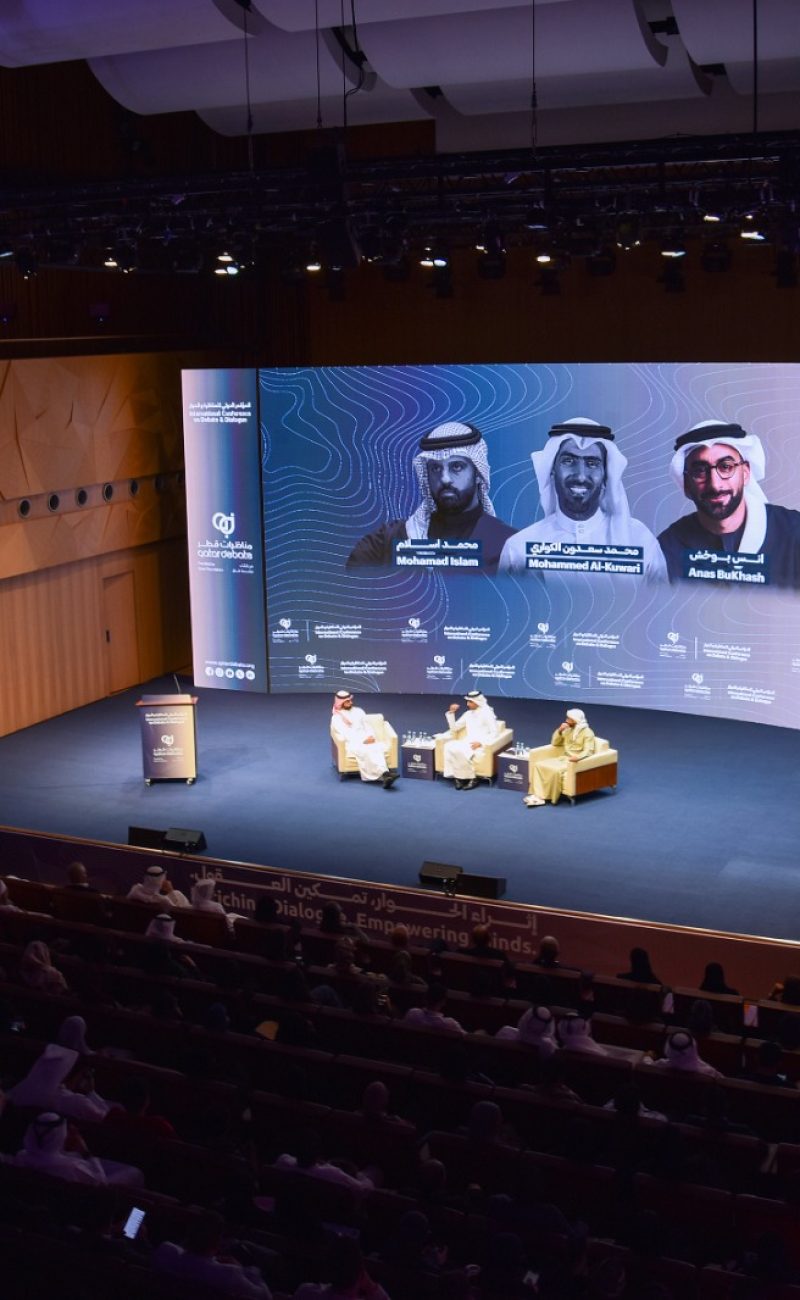
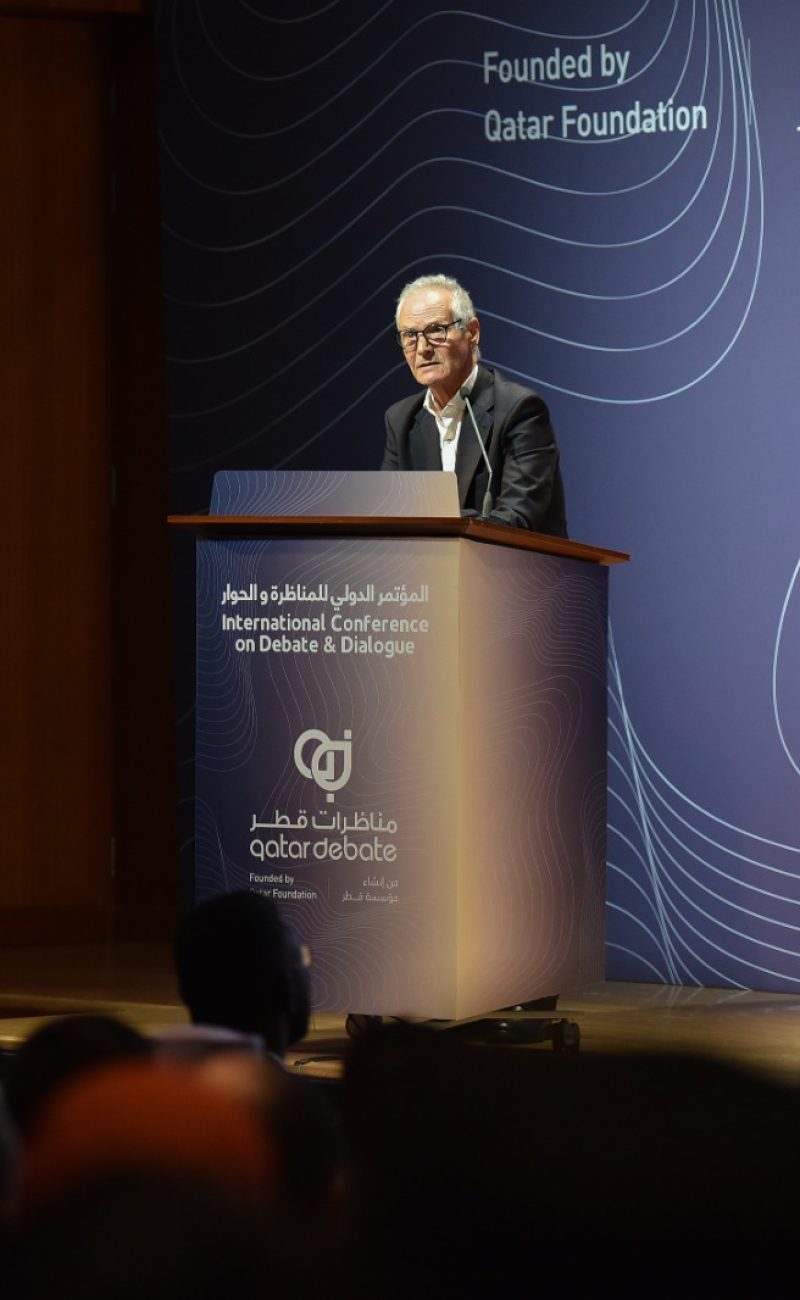
ICDD 2025
The past and the present...
The Tradition and the modern...
and the now...
Informal Logic Journal
A selected set of five research papers will be published in the prestigious Canadian journal Informal Logic (Q1 ranking), which offers open-access availability.
QD Research Fellowship – Cycle 2
A set of 12 accepted research contributions from the conference has qualified for two-year research funding under the second cycle of the QD Fellowship Program.
Conference Details

Date
19 - 20 May 2025

Location
Qatar National Conventions Center - QNCC

Language
Arabic & English
Conference Research Abstracts
Download the ICDD2025 research abstracts
Main Contribution Areas
Theoretical Exploration of Argumentation
in politics, media, international dialogue & Islamic traditions
Practical Applications
in societal, technological, & educational contexts
Practitioners Workshops
best practices of debate training & discussions around adjudication.
Keynote Speakers

Prof. Hammu Nakari
Professor of Higher Education in Logic and Philosophy
Prof. Hammou Nakari is a Professor of Higher Education in Logic and Philosophy, who dedicated 38 years (1978-2016) to teaching and research at the Faculty of Arts and Human Sciences, Mohammed V University – Agdal, Rabat, Kingdom of Morocco. He holds a State Doctorate (Doctorat d’État) in the Logic of Argumentation and was the recipient of the Grand Prize of Morocco for the Book in 1991. Dr. Nakkari is a prolific thinker and researcher in the fields of logic, philosophy, Islamic heritage, and argumentation theory. His notable works include The Foundational Methodology and Greek Logic through Abu Hamid al-Ghazali and Taqi al-Din Ibn Taymiyyah (1991), The Logic of Kalam: From Philosophical Dialectical Logic to Foundational Argumentative Logic (2006), and more recently, Legal Rationality: On the Rationality of Shari’ah Interpretation (2024).
The Logic of Disputation (Al-Mantiq al-Munāẓarātī)
Prof. Hammou Nakari’s presentation, “The Logic of Disputation (Al-Mantiq al-Munāẓarātī),” explores the rich tradition of munāẓarah (disputation) and its principles within Islamic and Arabic intellectual heritage. It aims to demonstrate the potential for integrating this traditional framework with contemporary theories of argumentative logic, informal logic, and critical thinking. Prof. Nakkari’ posits that the methodological codification of disputation complements that of argumentation and natural reasoning, both being rational theorizations of how fruitful dialogue between differing parties can be conducted. The lecture will specifically focus on four foundational claims that characterized the Islamic-Arabic logic of disputation: the primacy of disputation, the dependence of valid reasoning on the absence of counter-arguments, the legitimate right to object, and the obligation to respond under defined logical and ethical conditions.

Prof. Christopher Tindale
Distinguished University Professor and Director of the Centre for Research in Reasoning, Argumentation, and Rhetoric (CRRAR)
Prof. Christopher W. Tindale is a Distinguished University Professor and Director of the Centre of Research in Reasoning, Argumentation, and Rhetoric (CRRAR) at the University of Windsor in Canada, where he also co-edits the journal Informal Logic. He is the author of many papers in argumentation theory, and his recent books include Plato’s Reasons: Logician, Rhetorician, Dialectician (2023), How We Argue (2022), and The Anthropology of Argument: Cultural Foundations of Rhetoric and Reason (2021).
How Others Argue: Cross-Cultural Argumentation as a Vehicle of Understanding
Among the many consequences of historical and recent “globalization” has been the bringing together of different practices of argumentation and assumptions that underly those practices. Considering the current wealth of approaches to the practice of argumentation raises several questions. Do we see in others what we expect to see, or do we learn something new when observing how they reason? If “we” are part of a dominant culture of argumentation, what are the implications for ourselves and others? This talk explores such questions by looking at how argumentation crosses borders, particularly those that divide cultures. How others argue — what they count as evidence — helps expand our understanding of argumentation and should influence how we approach it and evaluate it.
Call For Paper
Conference Background Paper
Debate and critical thinking have a rich and long tradition within Arab-Islamic societies throughout the centuries. Particularly, the landscape of Arabic debating has significantly expanded to new forms and fields over the past decade and a half, thanks to the rise of digital media, evolving political climates, and the emergence of new NGOs and civil initiatives that embrace the culture of debate and dialogue in the Arab world. The launch of the International Universities Debating Championship (IUDC) in 2011 and the International Schools Debating Championship (ISDC) in 2012 in Doha catalyzed the growth of communities of Arabic debaters aged 15 to 25 across many Arab and non-Arab countries. This brought increased attention to debating as a competitive educational practice through local and international tournaments, and to a new understanding of dialogue integrating the past and the present, the tradition and the modern.
Arabic debating, as a rapidly growing culture, has spurred significant interdisciplinary research at the intersection of argumentation, rhetoric, linguistics, dialogue, critical thinking, education, and Islamic philosophy. In response, the Second International Conference on Debate & Dialogue (ICDD2) is organized by QatarDebate Center, founded by Qatar Foundation, to continue the efforts initiated in the first edition in 2023. ICDD2 aims to strengthen the newly formed network of researchers across disciplines to delve deeply into these interconnected fields and explore beyond the conventional boundaries.
By bringing together academics, practitioners, and enthusiasts, the conference explores various dimensions of debate and dialogue, emphasizing both theoretical and practical aspects. Through fostering rigorous research, QatarDebate aims to enhance intellectual discourse within the global debate and argumentation community.
In this CFP, the conference themes are arranged into three main areas as shown below.
In this area, priority is given to contributions that draw connections with the Arabic-Islamic world. However, not limited to it.
- Political Argumentation: Political discourse is a battleground where argumentation plays a critical role in influencing public opinion and achieving political goals. This theme explores the rhetorical techniques used by politicians, the role of debate in democratic processes, and the influence of media on political argumentation and discourse. Papers might address the ethical implications of political rhetoric, the use of persuasion techniques, and the impact of media framing on political debates.
- Argumentation of Peace & Conflict: The role of argumentation in shaping narratives of peace and conflict has profound implications for international relations and conflict resolution. This theme examines how narratives and rhetorical strategies are employed to justify military actions, advocate for peace, or challenge existing conflicts. Scholars are invited to explore historical and contemporary case studies and analyze the impact that specific narratives and discourses have on influencing and shaping public opinion on peace- and conflict-related issues.
- International Dialogue: Building on the dynamics of argumentation in conflict, this theme extends to international dialogue involving states and international and inter-governmental organizations. It focuses on the argumentative strategies used in diplomacy, international negotiations, and multilateral forums to address global issues. Contributions are expected to examine how states and organizations employ argumentation to navigate complex geopolitical landscapes, foster cooperation, and resolve conflicts.
- Argumentation in Modern Media: The proliferation of digital platforms has transformed how arguments are constructed and disseminated. This theme investigates how modern media, including social media and news outlets, shape public argumentation through content curation, framing, and the spread of false information. Contributions might analyze the interplay between media practices and argumentation, focusing on the role of algorithms and the challenges of maintaining informed public discourse in the digital age.
- Visual Argumentation: Visual elements, such as images, graffiti, and videos, are powerful tools for conveying arguments and influencing perceptions. This theme explores the use of visuals in constructing arguments and shaping public discourse. Scholars are encouraged to examine political cartoons, infographics, social media imagery, and other visual forms, analyzing their effectiveness in complementing or distorting verbal arguments.
- Contemporary Arabic Argumentation: Arabic argumentative practices have evolved uniquely within their cultural, religious, and linguistic contexts. This theme examines the characteristics of contemporary Arabic argumentation and its interaction with global discourses. Contributions should explore how these practices adapt to modern issues and media, offering insights into the evolution of Arabic rhetorical strategies.
- Debate in Islamic Tradition: Debate holds a significant place in Islamic tradition, serving as a tool for theological, philosophical, literary and legal discourse. This theme explores historical and modern practices of debate within Islamic contexts, including the theories of debate (munāẓara). Papers should analyze the role of debate in shaping Islamic thought and its application in contemporary discussions. Papers can also propose comparative approaches to the theories and practices of argumentation and debate between contemporary and Islamic traditions.
- The Manuscripts of Munāẓara: The manuscript collections in Islamic disciplines such as munāẓara and Jadal offer a historical perspective on the art of debating within Islamic civilization. This theme invites scholars to examine the content and context of these manuscripts, exploring the flourishing culture of debate and its socio-religious implications in shaping Islamic civilization. Contributions should provide insights into the historical foundations of debate and their enduring significance.
- Debate and Comparative Islamic Jurisprudence (Fiqh): Islamic jurisprudence fiqh is deeply rooted in the practice of rigorous argumentation to derive legal rulings from primary Islamic sources. This theme explores the pivotal role of argumentation within fiqh and its relevance to contemporary legal and ethical issues. Scholars are encouraged to examine the diverse methods of reasoning and interpretation employed in legal debates and to highlight the implications these methodologies can offer for modern Islamic law. Papers should aim to draw comparative analyses, offering insights into how Islamic law was developed and evolved through debates and critical thinking, and how it can inform contemporary legal discourses and ethical considerations.
- Debate and the Society: Debate and critical thinking have been considered by many recent social anthropological studies to be a formidable characteristic of a thriving society. Since the Arab-Islamic world and its societies of the past and present are shaped through various forms of debate and argumentation, this theme encourages sociological and anthropological frameworks that can closely understand the dynamics of debate within Arab-Muslim societies. This includes analysis of various public debates on matters of religion, norms and reform, investigations on how debates can facilitate social changes, and how society approaches the differences of opinion.
- Virtues, Emotions, and Argumentation:This theme explores the intersection of virtues, emotions, and argumentation, examining how ethical considerations and emotional appeals influence the construction and reception of arguments. Scholars are invited to analyze how virtues shape argumentative practices, and how emotions can be effectively and ethically integrated into argumentative discourse. Contributions should consider both historical perspectives and contemporary applications, offering insights into the role of virtues and emotions in fostering constructive and impactful argumentation.
In this section, priority is given to contributions utilizing empirical research methods
- Argumentation and AI: The integration of AI in argumentation presents both opportunities and challenges for enhancing dialogue and decision-making. This theme explores AI-driven tools such as argument mining, automated debate systems, and AI-assisted decision-making. Papers should address the ethical and practical implications of AI in argumentation, including issues of bias, transparency, and the dynamics of human-AI interaction.
- Arabic Argument Mining: This theme focuses on the development and application of Natural Language Processing (NLP) technologies for analyzing and generating arguments in Arabic. Contributions should highlight the challenges of linguistic diversity and the need for Arabic argumentative datasets and culturally sensitive algorithms, exploring how NLP can support sentiment analysis, opinion mining, and argumentative content modeling, evaluation, and generation in Arabic-speaking contexts.
- Societal Dialogue on Institutional and Individual Levels: This theme explores how argumentation facilitates communication and negotiation between institutions and individuals within societies. Contributions should analyze the practices of public debates, town hall meetings, and other forms of societal dialogue, focusing on the role of collective deliberation in addressing social issues and promoting civic engagement.
- Societal Dialogue on Family Level: Dialogue within familial relationships plays a crucial role in shaping family dynamics, conflict resolution, and decision-making processes. This theme invites scholars to examine the cultural and social factors influencing family dialogue, including generational differences and the impact of media on family communication.
- Debate & Education (Empirical Research ONLY): Debate is a powerful educational tool that enhances student learning, critical thinking, and civic engagement. This theme explores the role of debate in educational settings. Researchers are encouraged to employ qualitative methods such as interviews, focus groups, and classroom observations to gather in-depth insights. Papers discussing experiment designs with no data yet are also welcomed.
- Debate as a Language Learning Tool (Empirical Research ONLY): The practice of debate offers unique opportunities for language learners to engage in authentic communication and develop argumentation skills. This theme examines how debate can be used to enhance language proficiency, cultural awareness, and cognitive skills. Papers should explore strategies for incorporating debate into language learning curricula and activities. Papers discussing experiment designs with no data yet are also welcomed.
- Debate as High Impact Instructional Practice (HIIP): High Impact Instructional Practices are teaching practices that tend to have a higher impact than others on student learning. Research shows that debate promotes critical thinking by encouraging logical reasoning, problem-solving, and intellectual engagement, this theme focuses on the impact of debate on students’ critical thinking skills and their ability to engage with complex issues. Contributions should analyze how debate fosters higher-order thinking and supports intellectual development. Papers discussing experiment designs with no data yet are also welcomed.
- Debate in Shaping the Future Citizen: Debate plays a crucial role in preparing individuals to participate effectively in democratic processes and contribute to societal development. This theme explores how debate fosters civic competencies, ethical reasoning, and public engagement. Papers should examine the role of debate in shaping informed, responsible, and engaged citizens.
Here, priority is given to contributions from active members of the QatarDebate community.
- Best Practices of Debate Training: This workshop focuses on the methods and strategies used in debate training, including coaching techniques, curriculum design, and assessment practices. Contributions should highlight challenges and opportunities associated with debate training in diverse contexts, offering practical insights for educators and trainers.
- Debate Adjudication (Practices & Discussions): Effective adjudication is essential for fostering fair and constructive debate. This workshop examines the practices of debate adjudication, including judging criteria, feedback mechanisms, and the role of adjudicators. Contributions should explore best practices in adjudication and discuss the impact of adjudication on the development of debaters.
The Second International Conference on Debate & Dialogue (ICDD) provides a comprehensive platform to explore the multifaceted nature of argumentation and dialogue. By organizing themes into theoretical exploration, practical applications, and practitioner workshops, the conference ensures a well-rounded approach to understanding and advancing the practice of debate and dialogue. Participants will engage with diverse perspectives, fostering a deeper appreciation of argumentation’s role in shaping discourse, decision-making, and societal development.
Conference Committees
- Dr. Hayat Maarafi, Executive Director, QatarDebate Center.
- Mr. Abdulrahman Al-Subaie, Programs Director, QatarDebate Center.
- Mr. Mohammad Khader, Academic & Research Lead, QatarDebate Center.
- Dr. Elmekdad Shehab – Academic & Research Advisor, QatarDebate
- Abdellatif Sellami (Ph.D), Director of Education Research Center, Qatar University, Qatar.
- AbdulGabbar Al-Sharafi (Ph.D., Senior QD Fellow), Associate Professor of Linguistics, Sultan Qaboos University, Oman.
- Ali Al-Sanad (Ph.D.), Assistant Professor of Islamic Philosophy, PAAET, Kuwait.
- Ali Al-Omari (Ph.D.), Assistant Professor of Theology & Islamic Philosophy, Fatih Sultan Mehmet Vakif University, Türkiye.
- Ali Al-Zawqari (Ph.D., Senior QD Fellow), Postdoctoral Researcher in Artificial Intelligence, Vrije Universiteit Brussel, Belgium.
- Bader Al-Shatti (M.A., QD Ambassador), Public Schools Educational District Supervisor, Ministry of Education, Kuwait.
- Daifallah Al-Subhi (Ph.D. Candidate, QD Fellowship Lead), Doctoral Candidate in Law, University of Pittsburgh, USA.
- Daniel Mejia Saldarriaga (Ph.D. Candidate), Doctoral Researcher of Philosophy, University of Windsor, Canada.
- Hayat Maarafi (Ph.D), Executive Director – Ph.D. in Psycholinguistics, QatarDebate Center.
Heba Raouf Ezzat (Ph.D.), Assistant Professor of Political Theory, Ibn Haldun University, Türkiye.
Ilyess Gouissem (Ph.D.), Professor of Quran Sciences & Interpretation, Ez-zitouna University, Tunisia.
- Katharina Stevens (Ph.D., Co-editor of the Informal Logic Journal) Assistant Professor of Philosophy, University of Lethbridge, Canada.
- Maja Nenadović (Ph.D), Debate Coach & Political Consultant, Croatia.
- Mutaz Al-Khatib (Ph.D), Associate Professor of Methodology & Ethics, Hamad Bin Khalifa University, Qatar.
- Muhammad A. Rehman (M.A.), English Debate Instructor – M.A. in Education Public Policy, QatarDebate Center.
- Mohammed Al-Merri (Ph.D. Candidate, QD Ambassador), Lecturer of International Relations, Qatar University, Qatar.
- Mohammad Khader (M.A.), Academic & Research Lead – M.A. in Digital Humanities & Societies, QatarDebate Center.
- Muhammed Komath (M.A., QD Fellow), Researcher in Islamic History & Philosophy, QatarDebate Center.
- Pierre Boulos (Ph.D., Senior QD Fellow), Associate Professor of Philosophy, University of Windsor, Canada.
- Rahmi Oruç (Ph.D., ArguMunazara), Assistant Professor of Comparative Literature, Ibn Haldun University, Türkiye.
- Walter Edward Young (Ph.D.), Senior Researcher & Lecturer of Islamic Studies, McGill University, Canada.
Yehia Mohamed (Ph.D.) Associate Teaching Professor of Arabic Language, Georgetown University, Qatar.
- Zouhair Mednini (Ph.D.), Associate Professor of Islamic Philosophy, Ez-zitouna University, Tunisia.
- Dr. Elmekdad Shehab (Ph.D.), Academic & Research Advisor – Ph.D. in Islamic Thoughts & Ph.D. in Gulf Studies, QatarDebate Center
- Elizabeth Ismail (Ph.D. Candidate), Doctoral Researcher of Philosophy, University of Windsor, Canada.
More to be announced soon.
For Authors
- The ICDD adopts high standards of a double-blind review process to evaluate all submitted contributions in two phases: abstract evaluation and full-paper evaluation.
- Abstracts should outline a clear research question and methodology, demonstrate clear relevance to the conference themes, provide a brief background on the topic, and should not exceed 250 words. Submissions that lack any of these criteria will be directly eliminated.
- The ICDD accepts papers of two lengths (Short: 6-8 pages & Long: 15-20 pages) excluding references and appendices.
- Contributions are accepted in both Arabic and English.
- Some high quality papers will be selected for publication in a special issue of the Informal Logic, a prestigious Canadian Q1 open-access journal. However, this option is only available for long papers written in English.
- The rest of accepted contributions will be published as conference proceedings on QatarDebate website.
- All submissions should be made through the official ICDD portal on softconf, and anywhere on earth (AoE) is applied to all deadlines.
-
- Abstract submission opens: 7 July 2024
- Abstract submission deadline:
15 September 202422 September 2024 - Notification of abstract qualification: 1 November 2024
- Full-paper submission deadline: 1 January 2025
- Notification of acceptance with reviewers’ comments: 1 March 2025
- Camera-ready version submission deadline: 15 April 2025
- Conference Days: 19-20 May 2025
- QatarDebate will be responsible for issuing the VISA for authors of accepted contributions.
- Once accepted, only one author per contribution can apply for a round-trip ticket to Doha to be covered by QatarDebate.
- Once accepted, QatarDebate will provide hotel accommodation for one only author per contribution
- QatarDebate will provide breakfast at the hotel, lunch and coffee breaks at the venue for all invited participants.
- QatarDebate will provide transportation between the the hotel and the venue.
will be posted later.
Do You have more Question?
Email The Academic & Research Program at:
academics@qatardebate.org